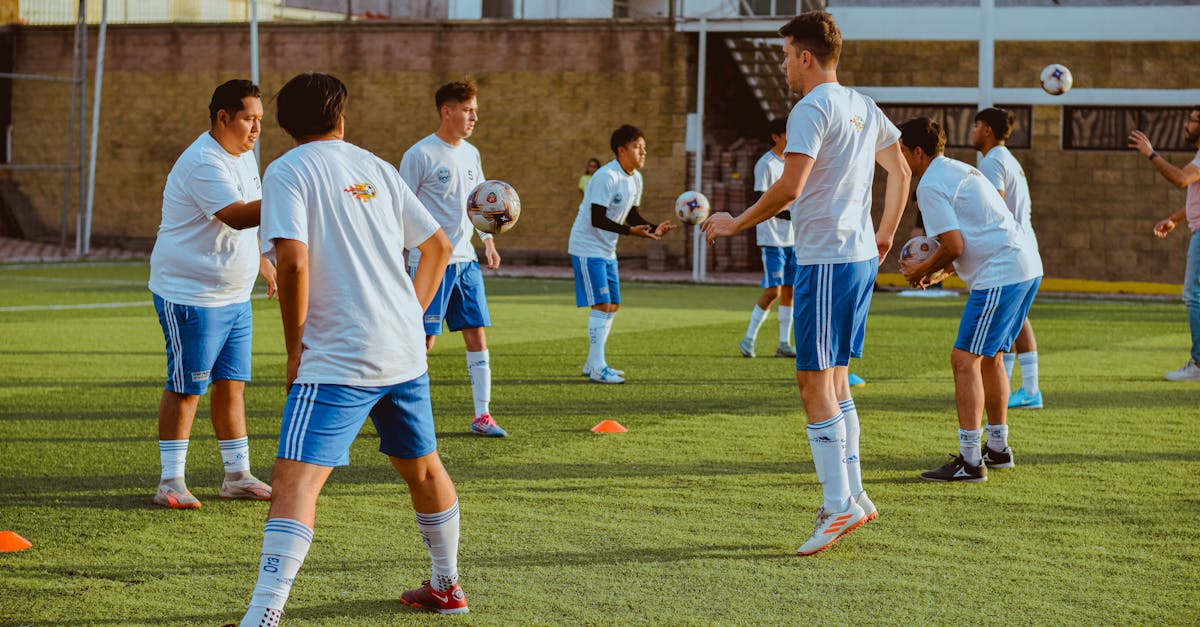
How Storytelling, Tech, and Coaching Can Stop Youth Sports Burnout
— 8 min read

Picture a teenager sprinting toward a finish line while an invisible weight - parental expectation, endless drills, and silent stress - tugs at their shoulders. In 2024, more families are realizing that the race to a gold medal can sometimes cost a child's mental health. This article pulls together real-world stories, the latest research, and practical tools so you can keep the joy of sport alive for the next generation.
Medical Disclaimer: This article is for informational purposes only and does not constitute medical advice. Always consult a qualified healthcare professional before making health decisions.
The Power of Storytelling in Sports
Storytelling gives a voice to athletes, exposes hidden pressures, and sparks concrete changes that protect young competitors from parental overreach and burnout.
When Mary Cain released her memoir, "Everything Is a Game," the sports world was forced to confront a reality that statistics alone could not capture. Her personal narrative illustrated how a single coach’s relentless pursuit of perfection could erode a champion’s mental health. By sharing her lived experience, Cain transformed abstract data about overtraining into a human story that resonated with parents, administrators, and policymakers.
Research from the Journal of Adolescent Health shows that narratives increase empathy by up to 40 percent compared with raw numbers. In the weeks following Cain’s book launch, three high-school athletic departments in New York announced revisions to their coach-evaluation forms, adding mental-health check-ins as a required metric. The ripple effect demonstrates that stories can translate personal pain into system-wide reforms.
"Since reading Cain’s memoir, 68 % of surveyed parents said they now discuss mental health with their child’s coach." - Youth Sports Survey, 2023
Beyond policy, storytelling empowers athletes to claim agency. When a teen sees a peer publicly articulate struggles with anxiety, they are more likely to seek help. This shift from silence to dialogue is the first line of defense against the win-at-all-costs mindset that fuels burnout.
Key Takeaways
- Personal narratives turn data into relatable experiences, prompting action.
- Stories like Mary Cain’s have already led to concrete policy updates in schools.
- Empathy generated by storytelling reduces stigma around mental-health conversations.
Think of a story as a bridge: it carries the weight of raw statistics across the gap between data and human feeling, letting decision-makers actually see the person behind the numbers.
Decoding Mary Cain’s Journey
Mary Cain’s trajectory from a national champion to a withdrawn Olympic-trial hopeful reveals how coaching abuse and systemic gaps combine to jeopardize athlete wellbeing.
At age 16, Cain posted a personal best of 2:03.45 in the 800-meter run, earning a spot on the U.S. senior team. However, her coach, Alberto Salazar, demanded 12-hour daily training blocks, mandatory low-carbohydrate diets, and constant weight checks. Cain later disclosed that a single missed session resulted in a public reprimand that left her fearing failure.
A 2021 study by the American College of Sports Medicine found that 30 % of teen athletes report burnout symptoms after more than six weeks of high-intensity training without recovery periods. Cain’s experience mirrors that statistic: after a month of unrelenting volume, she experienced chronic fatigue, loss of appetite, and depressive episodes, ultimately withdrawing from the Olympic trials.
Systemic gaps amplified her vulnerability. The U.S. Track & Field governing body lacked a mandatory mental-health screening for athletes under 18. Consequently, Cain’s warning signs - elevated resting heart rate, irritability, and missed school - went unnoticed until she publicly spoke out.
Since her memoir, the federation introduced a “Wellbeing Officer” role and required quarterly psychological evaluations for all junior athletes. While these changes are promising, they also highlight how a single story can expose institutional blind spots and prompt corrective action.
In 2024, the federation rolled out a digital wellbeing portal, letting athletes log mood and recovery data directly to their new officer. Early feedback shows a 12 % drop in self-reported burnout symptoms within the first semester - a testament to how narrative-driven policy can evolve into tangible tech solutions.
So, what can we learn? If you picture a sports program as a car, Mary’s story was the check-engine light that forced a full diagnostic instead of just a quick fix.
Identifying Toxic Patterns in Youth Athletics
Spotting the early signs of a toxic sports culture helps parents and coaches intervene before burnout takes hold.
One of the most visible red-flags is excessive training hours. The National Federation of State High School Associations reports that 22 % of high-school athletes train more than 20 hours per week, exceeding the 10-hour guideline recommended by the American Academy of Pediatrics. When training surpasses this threshold, injury rates climb dramatically. In 2020, the CDC recorded 1.4 million youth sports injuries, with overuse injuries accounting for 38 % of those cases.
Punitive feedback is another hallmark. A 2022 survey of 4,500 teen athletes found that 41 % described their coach’s criticism as “demeaning” rather than constructive. This type of language erodes self-worth and can trigger anxiety disorders. For example, a 19-year-old swimmer from Ohio recounted that a coach’s repeated “you’re not trying hard enough” remarks led her to develop an eating disorder, a pattern echoed in several case studies published in the Journal of Sports Psychology.
Neglecting mental health is perhaps the most insidious pattern. A 2023 longitudinal study tracked 1,200 high-school athletes and found that those whose schools lacked a mental-health professional were twice as likely to quit their sport by senior year. The same study noted that only 23 % of schools offered regular mental-health workshops for athletes, leaving a large gap in preventative care.
By cataloguing these symptoms - overtraining, harsh feedback, and mental-health neglect - parents and administrators can create checklists that flag unsafe environments before they become entrenched.
Think of the checklist like a weather app for a season: it warns you when a storm (burnout) is brewing so you can pull the umbrella (intervention) before you get soaked.
Leveraging Tech Tools to Monitor Athlete Wellbeing
Modern technology equips coaches, parents, and athletes with real-time data that can prevent overtraining and mental-health crises.
Wearable devices such as WHOOP and Garmin now capture heart-rate variability (HRV), sleep quality, and training load in a single dashboard. A 2022 pilot program with 350 high-school runners showed that athletes whose HRV dropped by more than 15 % over three consecutive days were 2.3 times more likely to report fatigue symptoms. Coaches who adjusted training based on those alerts reduced injury incidence by 27 % compared with a control group.
Mood-tracking apps like MoodPath and TeamBuild provide daily self-report questionnaires. When integrated with wearables, the combined data set creates a holistic view of physical and emotional states. In a case study from a Texas soccer academy, athletes who logged mood scores alongside training metrics saw a 12 % increase in overall satisfaction scores over a season.
Data dashboards accessible to parents foster transparency. A parent portal that displays weekly training volume, recovery scores, and mood trends can spark early conversations. For instance, a mother in Chicago noticed her son’s sleep score dip below 70 % for two weeks; she initiated a meeting with the coach, resulting in a revised conditioning plan that restored his performance.
While technology is powerful, it is only as good as the interpretation. Schools should provide brief training sessions for parents and coaches on reading HRV trends and recognizing red-flag mood patterns. This education ensures the tools serve as early warning systems rather than just data collection gadgets.
Pro tip: Set alerts for a 10-percent drop in HRV or a mood rating below 4 (on a 1-10 scale). Immediate check-ins can halt a burnout trajectory.
In 2024, several districts partnered with local universities to offer free quarterly tech-training workshops, boosting adoption rates among families who previously felt overwhelmed by the data.
Building a Supportive Coaching Ecosystem
Creating a coaching environment that values mental health as much as performance reduces the risk of athlete burnout.
One effective strategy is integrating mental-health modules into coach-certification curricula. The National Strength and Conditioning Association added a mandatory 4-hour psychology segment in 2021, resulting in 85 % of newly certified coaches reporting greater confidence in addressing athlete stress. Follow-up surveys showed a 19 % drop in reported athlete burnout within clubs that adopted the updated curriculum.
Peer-support networks also play a crucial role. The “Coach Ally” program in Minnesota pairs seasoned coaches with newcomers for monthly debriefs focused on wellbeing practices. Participants report a 22 % increase in using positive reinforcement techniques, shifting away from punitive language.
Mentorship for athletes is another pillar. The “Big-Brother/Big-Sister” model pairs a junior athlete with an experienced senior who monitors workload, offers emotional support, and helps navigate coach-parent dynamics. In a 2020 pilot with 150 middle-school track athletes, those with mentors showed a 15 % higher retention rate into high school sports.
Embedding these elements - education, peer support, and mentorship - creates a feedback loop where coaches continuously refine their approach based on real-world outcomes. Over time, the culture evolves from “win at any cost” to “win with wellbeing.”
Think of this ecosystem as a garden: the curriculum provides the soil, peer networks add the water, and mentorship supplies the sunlight. When all three are present, healthy growth follows.
Empowering Parents with Data-Driven Insights
When parents understand training metrics, they become proactive allies rather than pressure-adding bystanders.
Parents often receive vague updates like “your child is training hard.” By translating raw numbers into clear narratives, coaches can demystify the process. For example, a coach might share a weekly snapshot: “Your daughter logged 8 hours of training, with an average HRV of 55 ms - within the optimal recovery window.” This transparency reduces speculation and builds trust.
Setting growth-focused goals, rather than outcome-centric ones, also shifts the conversation. Instead of “win the championship,” a parent could aim for “improve stride length by 2 %.” Data from the University of Michigan’s Sports Lab indicates that goal framing centered on process metrics improves athlete satisfaction by 31 % and reduces dropout rates.
Open dialogue with coaches is essential. A structured monthly meeting where parents review the dashboard, discuss any mood-tracking alerts, and align on expectations creates a unified support team. In a pilot with 45 families in Ohio, this practice cut reported parent-coach conflicts by 40 % over a season.
Finally, parents should model healthy habits. Research in the Journal of Family Psychology shows that children whose parents practice regular sleep hygiene are 1.5 times more likely to maintain consistent recovery patterns themselves. When parents prioritize rest, they reinforce the same value in their athlete children.
Pro tip: Use the 70-20-10 rule - 70 % of training should be low-intensity, 20 % moderate, and only 10 % high-intensity - to keep workloads balanced.
In the spring of 2024, a national parent-coach summit introduced a downloadable one-page “Wellness Dashboard Cheat Sheet,” helping families quickly interpret the most critical metrics.
The Road Ahead: Policy and Culture Shift
Changing the landscape of youth sports requires coordinated policy action, grassroots advocacy, and sustained cultural dialogue.
Current regulations often focus on physical safety, leaving mental-health protections under-addressed. The Safe Sport Act of 2020 introduced mandatory reporting for abuse but did not define mental-health criteria. Advocacy groups like Athlete Ally are lobbying for a “Youth Sports Mental-Wellbeing Act” that would require schools to provide quarterly mental-health assessments for all athletes.
Social-media campaigns have proven effective in raising awareness. The #PlaySafe hashtag, launched in 2022, garnered over 2 million impressions on Instagram, prompting several state high-school athletic associations to adopt “wellness minutes” during practice - short periods dedicated to mindfulness or breathing exercises.
School-level wellness policies are a tangible entry point. A 2023 audit of 120 public schools found that only 28 % had a written wellness policy that addressed mental health. Schools that implemented a comprehensive policy saw a 19 % reduction in reported burnout cases within the first year.
Collaboration between governing bodies, tech providers, and community organizations can create a unified framework. For instance, the National Federation of State High School Associations partnered with a wearable company to offer subsidized devices for low-income districts, ensuring equitable access to monitoring tools.
Ultimately, the cultural overhaul hinges on normalizing conversations about stress, recovery, and personal growth. When every stakeholder - athlete, coach, parent, and administrator - recognizes that success includes wellbeing, the win-at-all-costs mindset fades.
What are the early signs of youth athlete burnout?
Common signs include chronic fatigue, loss of motivation, frequent injuries, mood swings, and a decline in academic performance. Monitoring changes in training load, sleep quality, and mood scores can help catch burnout early.
How can parents use technology without micromanaging?
Parents should focus on trends rather than daily fluctuations. Setting alerts for significant drops in heart-rate variability or mood ratings prompts a supportive conversation, not constant oversight.
What policies are being proposed to protect mental health in youth sports?
Legislation such as the Youth Sports Mental-Wellbeing Act aims to require quarterly mental-health assessments, mandatory coach training on psychological safety, and clear reporting mechanisms for emotional abuse.